



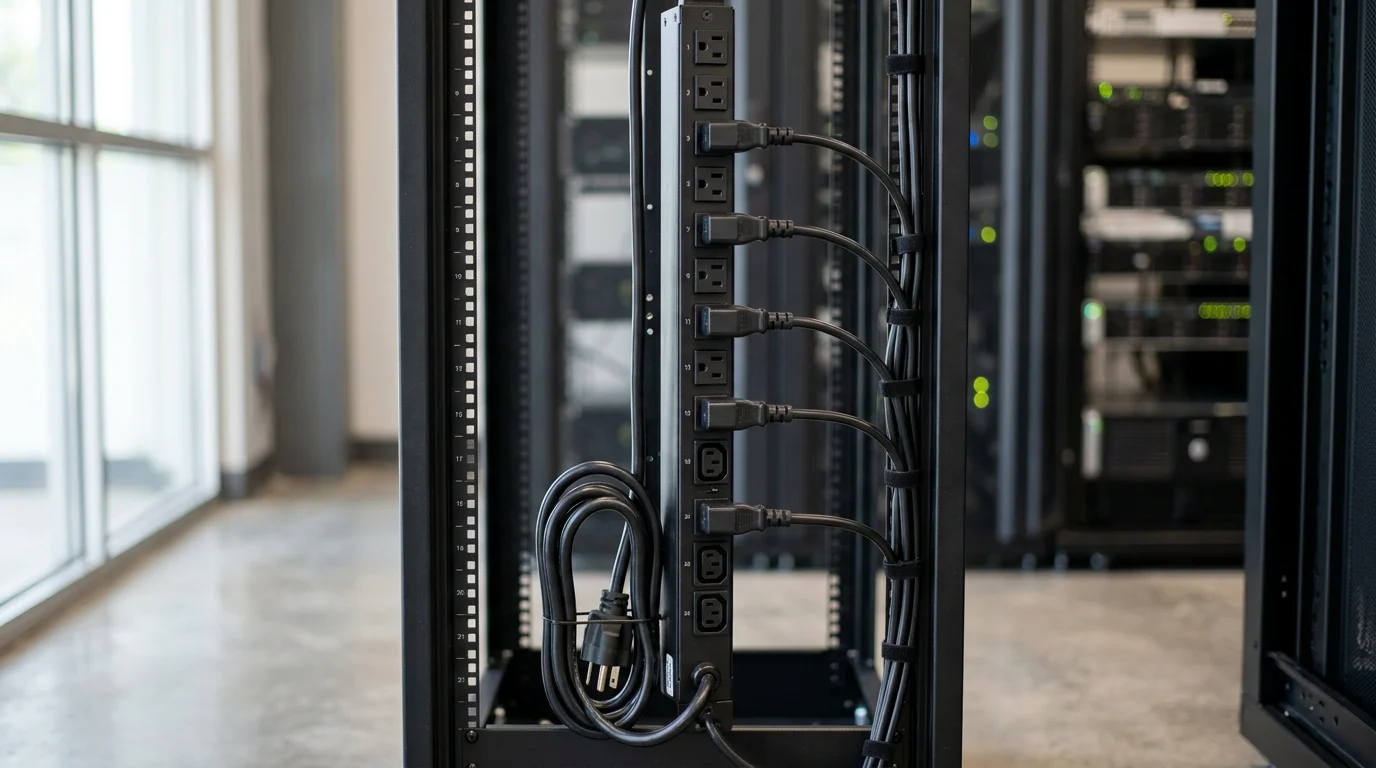
In high-density racks, a PDU is only as reliable as the path its power cable takes into the cabinet. Entry points that look minor during planning can later create tight bends, blocked Zero-U mounting space, airflow leaks, and difficult service access. For 60A whips and other heavy-duty feeds, even a few inches of clearance can determine whether an installation is safe, scalable, and thermally efficient. This guide examines how entry location, bend radius, strain relief, brush grommets, and knockout choices influence PDU performance and cabinet reliability, helping data center teams make cleaner, safer routing decisions before deployment pressure begins.
Why Cable Entry Choices Affect PDU Performance
When designing high-density server cabinets, power distribution unit (PDU) integration is often treated as an afterthought, with cable entry points selected based on convenience rather than strategic alignment. The physical path a power cable takes to enter the enclosure fundamentally alters the cabinet's operational baseline. A poorly chosen entry point does not merely complicate installation; it introduces mechanical stress, compromises thermal management, and restricts future hardware scalability.
Understanding how cable entry choices interact with PDU performance requires looking beyond the metal cutouts. Evaluate these pathways as critical intersections where structural integrity, electrical safety, and thermodynamics meet. By treating cable entry as a primary architectural variable, you can prevent bottlenecks that typically emerge during the final stages of equipment deployment.
Key Cable Entry Terms to Know
To navigate this landscape effectively, standardize your vocabulary regarding cable management hardware. The most critical term is 'bend radius,' which defines the minimum curve a power cable can safely tolerate without damaging its internal conductors or insulation. For heavy-duty PDU applications, calculate a minimum bend radius of 6 to 8 times the cable's outer diameter. This means a standard 60A PDU whip may require up to an 8-inch bend radius clearance just to enter the cabinet safely.
Other essential terms include 'knockouts' (pre-scored metal sections that, once removed, permanently dictate the PDU whip's routing path and affect structural integrity), 'brush grommets' (bristled barriers that seal around thick PDU cables to maintain cabinet airflow while allowing passage), and 'strain relief' (mechanical fittings that secure the cable at the entry point to prevent the weight of the whip from pulling on the PDU's internal connections).
Impact on Capacity, Airflow, and Mounting
The physical location of the entry point directly dictates where you can mount a Zero-U PDU. If a cabinet forces a bottom cable entry but the PDU's input cord is located at its top, you are forced to route thick, inflexible cables across the entire vertical height of the rack. This consumes valuable mounting space and limits capacity to install additional networking or power management gear. The type of PDU also matters: intelligent, switched, or metered PDUs are generally bulkier and feature additional network communication lines, making entry point congestion a much higher risk compared to basic PDUs.
Furthermore, the entry choice heavily impacts thermal performance. In forced-air cooling environments, unsealed or improperly sized cable entries act as exhaust leaks. Field measurements often indicate that poorly managed bottom entry cutouts can cause up to a 15% reduction in cabinet cooling efficiency, depending on the specific cabinet and airflow dynamics, due to bypass airflow. Securing these entry points with proper blanking or brush panels ensures that cold air reaches the IT equipment rather than escaping through the floor plenum.
Comparing Common Cable Entry Options
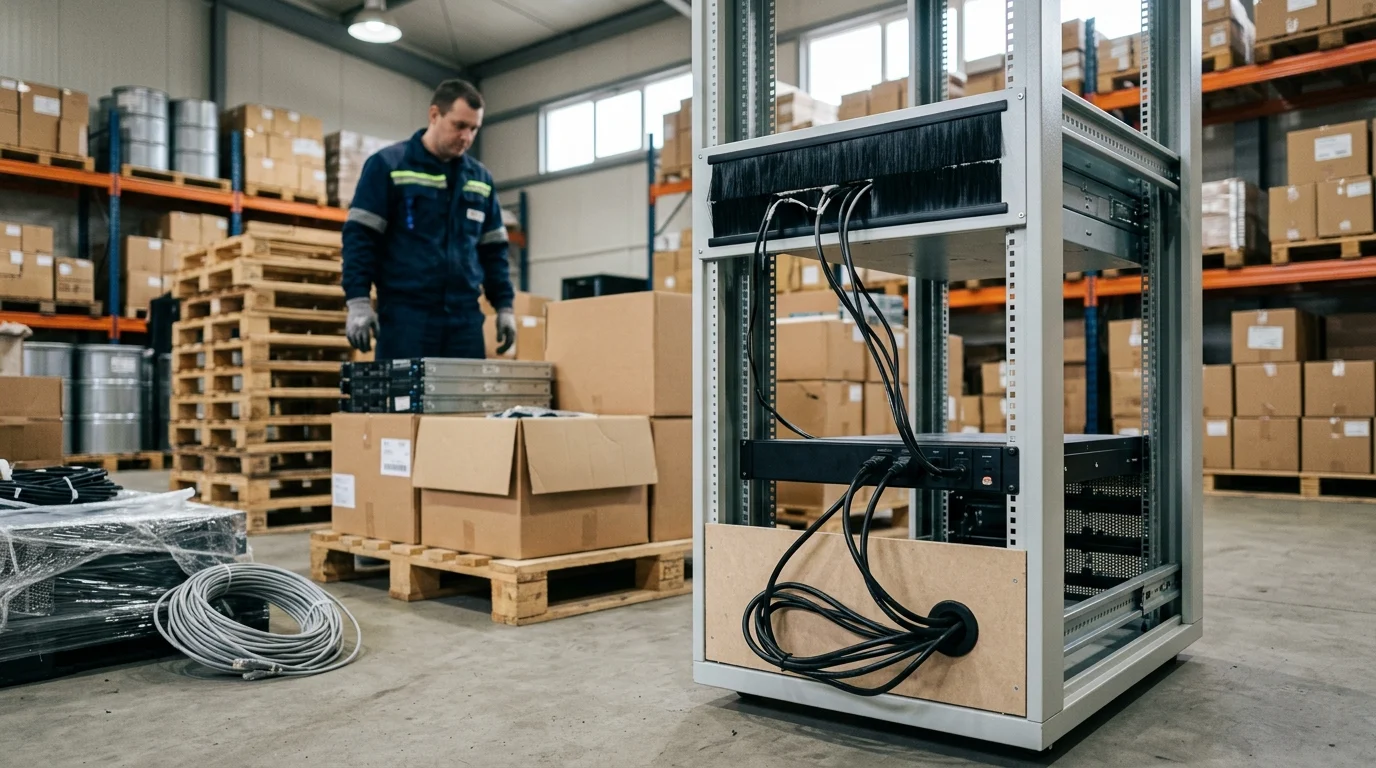
Selecting the physical ingress point for PDU power cables requires aligning cabinet architecture with the facility's broader power distribution strategy. There is no universally superior entry location; rather, the optimal choice depends entirely on whether the data center relies on overhead busways, raised floor plenums, or adjacent power distribution panels. By comparing the operational realities of each configuration, you can match the cabinet hardware to the facility's infrastructure.
Top, Bottom, Rear, Side, and Brush-Gland Entries
The orientation of the entry point dictates the entire cable lifecycle, from initial installation to emergency replacement. Evaluate these primary configurations based on facility layout and maintenance access requirements.
| Entry Type | Primary Application | Airflow Leakage Risk | Minimum Installation Clearance* |
|---|---|---|---|
| Top Entry | Overhead busways / Slab floors | Low | 12 inches overhead |
| Bottom Entry | Raised floor plenums | High (requires brush seals) | 18 to 24 inches plenum depth |
| Rear/Side Entry | Adjacent cabinet linking | Medium | 6 to 8 inches lateral |
*Note: Minimum clearances are illustrative baselines for standard high-amperage (e.g., 60A) whips with an 8-inch bend radius. Actual requirements will vary by PDU amperage category.
Top entry is the preferred standard for modern slab-floor data centers utilizing overhead power busways, as it keeps heavy power cables away from under-floor cooling paths. Conversely, bottom entry remains mandatory in legacy raised-floor environments, though it requires a plenum depth of at least 18 to 24 inches to accommodate the rigid bend radius of high-amperage whips. Side and rear entries, often utilizing specialized brush glands, are highly effective when routing power from adjacent inline UPS systems or side-car distribution cabinets.
Security, Fire Stopping, Dust Control, and Compliance
Beyond routing logistics, the entry point serves as a critical boundary for environmental control and regulatory compliance. When specifying cabinets for harsh environments, open knockouts are entirely unacceptable. Implement sealed entry glands that achieve specific Ingress Protection ratings, typically targeting IP54 for splash resistance or IP6X for complete dust-tight performance in edge computing deployments.
Fire stopping is equally critical. In jurisdictions with strict building codes, any cable entry penetrating a fire-rated containment zone must be sealed. Intumescent fire-stopping putty or specialized mechanical transit frames are frequently utilized at entry points, which are often mandated to provide up to a 2-hour fire resistance rating (such as those tested under UL 1479 standards). Failing to account for these compliance metrics during the cabinet selection phase inevitably leads to costly retrofits during safety inspections.
How to Choose the Right PDU Cable Entry
Treat PDU cable entry as a fixed constraint that must be resolved long before purchasing hardware. Attempting to force a mismatched PDU into a cabinet with incompatible entry points leads to compromised bend radii, violated warranties, and safety hazards. Keep in mind that PDU input cord locations, whip lengths, and mounting brackets vary significantly by manufacturer. Always verify compatibility with your specific PDU models rather than assuming universal cabinet standards. Choosing the right configuration requires a methodical approach that balances immediate power demands with long-term operational flexibility.
Specification Steps That Reduce Installation Risk
A sequential specification approach helps eliminate deployment bottlenecks.
Key Takeaways
- Plan PDU cable entry before installation because the entry point determines mounting options, bend radius clearance, and long-term rack scalability.
- Allow a bend radius of 6 to 8 times the cable’s outer diameter for heavy-duty PDU whips to avoid conductor or insulation damage.
- Use strain relief at cabinet entry points to prevent cable weight from pulling on the PDU’s internal electrical connections.
- Seal unused or oversized cable openings with brush panels, grommets, or blanking hardware to reduce bypass airflow.
- Match cable entry location to the PDU input cord position, especially for Zero-U, intelligent, switched, or metered PDUs that need more routing space.
- Treat knockouts as permanent routing decisions because removing them can affect both cable paths and cabinet structural integrity.
Frequently Asked Questions
Why does cable entry location matter for a PDU?
Cable entry location affects bend radius, strain relief, airflow, and where a Zero-U PDU can be mounted. A poor entry path can add cable stress, reduce cooling efficiency, and limit future rack capacity.
What bend radius should be planned for PDU power cables?
For heavy-duty PDU applications, plan for a minimum bend radius of 6 to 8 times the cable’s outer diameter. A 60A PDU whip may need up to 8 inches of clearance.
How can cable entries affect cabinet cooling?
Unsealed or oversized cable openings can create bypass airflow and exhaust leaks. Poorly managed bottom cutouts may reduce cooling efficiency by up to 15%, depending on cabinet design and airflow conditions.
What is the purpose of strain relief at a cabinet entry point?
Strain relief secures the cable where it enters the cabinet, preventing the weight or movement of the PDU whip from pulling on internal PDU connections.
Are intelligent PDUs harder to route than basic PDUs?
Often, yes. Intelligent, switched, and metered PDUs are usually bulkier and may require network communication lines, increasing congestion risk around cable entry points.