



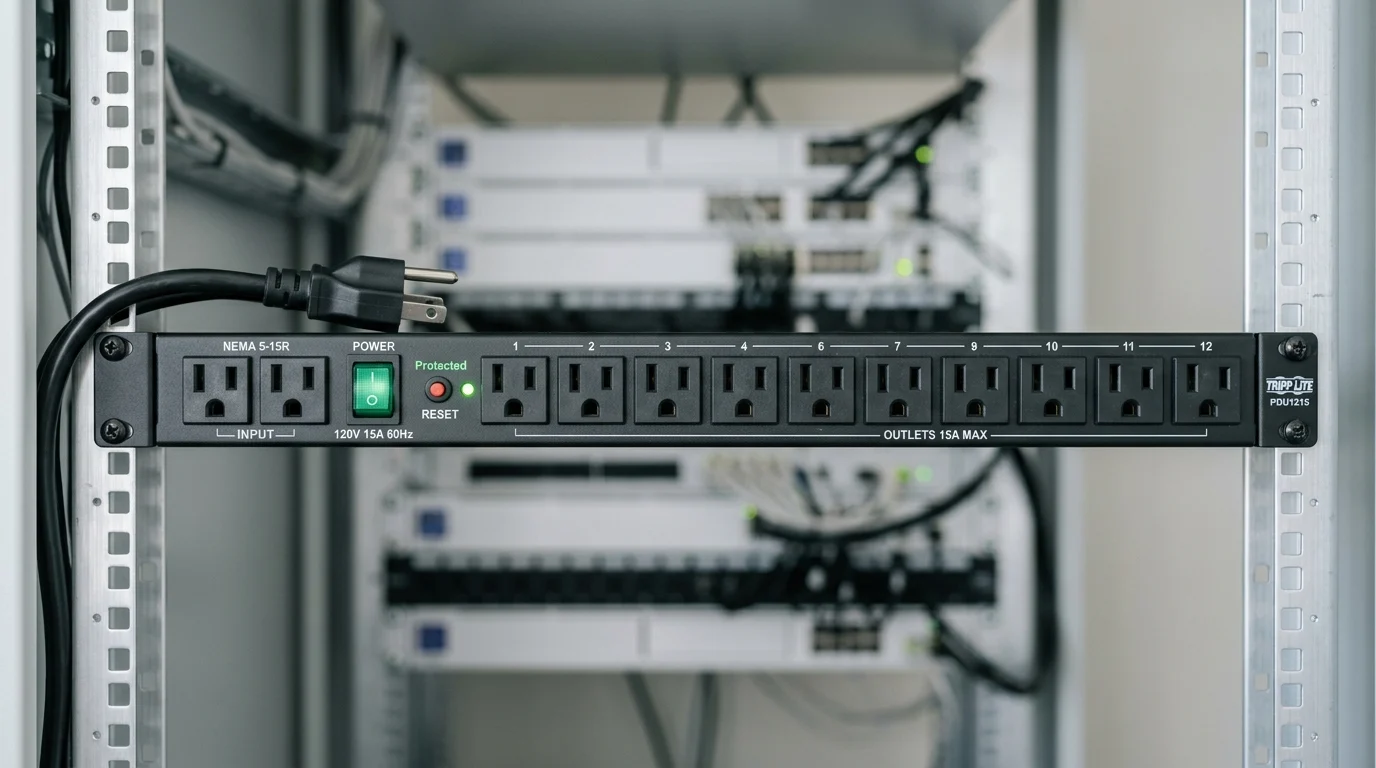
Power density is rising fast as AI, high-performance computing, and edge deployments push more equipment into every rack unit. That shift is making cabinet design and PDU strategy inseparable: a rack that cannot handle heavier loads, thicker cables, higher-amperage power strips, or rapid service access can quickly become an operational bottleneck. Modular rack cabinets are gaining attention because they give data center teams more flexibility in mounting, airflow, cabling, and future expansion. This article looks at what defines a modular cabinet, why PDU compatibility matters, which specifications deserve close scrutiny, and when modularity delivers real lifecycle value versus unnecessary upfront complexity.
Why modular rack cabinets with PDU planning matter
The traditional fixed-welded server rack is rapidly becoming obsolete in modern IT infrastructure design. Industry adoption trends show a decisive shift toward modular rack cabinets seamlessly integrated with intelligent PDU (Power Distribution Unit) planning, driven by the rapid expansion of hyperscale facilities and the need for agile edge computing. Market momentum heavily favors this approach because it allows facilities to deploy adaptable enclosures that evolve alongside rapidly changing hardware requirements, mitigating the need for disruptive and costly 'rip-and-replace' upgrades. By treating the cabinet and power delivery as a unified system, organizations ensure greater operational continuity and lifecycle value.
What defines a modular rack cabinet
A modular rack cabinet is characterized by its highly configurable architecture. Rather than relying on a static, inflexible frame, these enclosures feature adjustable 19-inch EIA-compliant mounting rails, removable split-side panels for efficient inter-rack cabling, and modular roof panels equipped with brush strips for optimized cable ingress and egress. Crucially, these systems incorporate specialized, toolless mounting brackets specifically designed for zero-U vertical PDUs. When evaluating these brackets, it is important to verify whether they support vendor-neutral, third-party PDU integration—such as using standard button-mount keyholes—or if they lock buyers into proprietary mounting ecosystems that only accept the cabinet manufacturer's specific power strips. This modular approach to power mounting enables technicians to swap or upgrade high-amperage power strips without un-racking servers or disrupting active operations. It also supports the easy attachment of hot or cold aisle containment panels, while specialized cable management fingers maintain the critical bend radius for high-speed fiber optics.
Key demand drivers in data centers
The primary catalyst for this shift is the escalating power density within modern facilities driven by high-performance computing, machine learning, and AI workloads. Modular enclosures support these high-density applications by accommodating wider footprints—often stepping up to 800mm widths instead of the standard 600mm—to manage the massive cable bundles and thicker, high-amperage PDUs required to deliver that power. Furthermore, edge computing deployments demand modularity so that standardized micro-data center pods can be rapidly assembled, scaled, and transported to remote locations with minimal on-site engineering. However, it is worth noting that for low-density, static environments, highly modular cabinets may introduce unnecessary complexity and upfront costs compared to standard racks.
How to compare cabinet and PDU options
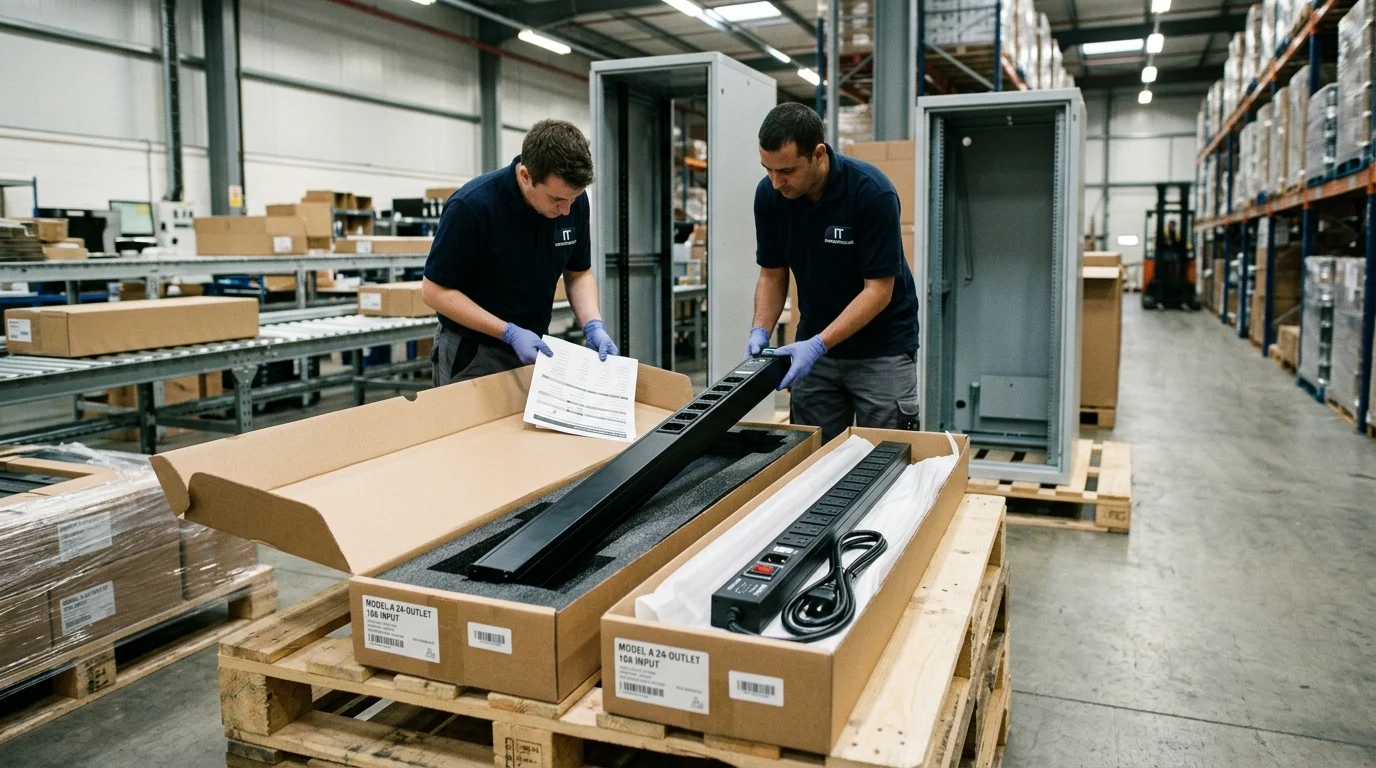
When evaluating infrastructure upgrades, procurement teams must look beyond basic external dimensions to understand how cabinet mechanics and power distribution act as a cohesive ecosystem. Comparing options requires a rigorous, objective analysis of structural integrity, thermal management capabilities, and the intelligence level of the integrated PDU.
Cabinet specifications, airflow, and load ratings
Structural specifications dictate what hardware can be safely deployed and maintained. For enterprise environments, standard practice mandates a minimum static load rating of 1,360 kg (3,000 lbs) and a dynamic rolling load of at least 1,020 kg (2,250 lbs). These dynamic ratings are critical to avoid weight distribution challenges when transporting fully populated racks across the data center floor. Thermal management is equally critical. High-density server deployments require front and rear doors with an absolute minimum of 80% open perforation to ensure adequate cold-aisle to hot-aisle airflow. If the perforation drops below this threshold, server cooling fans must work significantly harder, which severely impacts the facility's overall Power Usage Effectiveness (PUE) metrics, raises ambient noise levels, and increases energy consumption. Additionally, verifying that the cabinet's EIA-310-E mounting rails offer continuous depth adjustability ensures compatibility with varying server chassis lengths.
Basic, metered, monitored, and switched PDUs
Selecting the right PDU is just as vital as specifying the cabinet frame. PDUs generally fall into four distinct tiers based on telemetry and remote control capabilities. Basic PDUs offer reliable but unmanaged power distribution, suitable only for the simplest deployments. Metered PDUs provide local visual load displays to help technicians prevent circuit overloads during manual server provisioning. Monitored PDUs represent a significant step up, transmitting real-time voltage, amperage, and environmental data via SNMP or Modbus, allowing centralized DCIM platforms to track power consumption down to the individual outlet level. Finally, switched PDUs offer the ultimate control, enabling administrators to remotely reboot unresponsive servers or sequence power-ups to prevent inrush current spikes.
While intelligent PDUs offer immense operational benefits, their network connectivity introduces a genuine cybersecurity attack surface. Teams must secure these networked power devices through isolated management VLANs, strong access controls, and rigorous firmware update logistics to prevent malicious actors from compromising power delivery. Additionally, because high-density environments generate significant heat, PDUs should be rated for a continuous operating ambient temperature of at least 60°C (140°F) to prevent premature thermal failure. Note that cost premiums vary significantly by vendor, region, and feature set, but general illustrative ranges are provided below.
| PDU Type | Local Display | Remote Monitoring | Remote Switching | Illustrative Cost Premium |
|---|---|---|---|---|
| Basic | No | No | No | Baseline |
| Metered | Yes | No | No | ~20% to 40% |
| Monitored | Yes | Yes | No | ~80% to 120% |
| Switched | Yes | Yes | Yes | ~150% to 200% |
How to choose the right solution
Finalizing infrastructure procurement requires a strategic alignment of current technical requirements with long-term financial objectives. Organizations must synthesize power density projections with the realities of supply chain logistics to select a modular rack and PDU combination that delivers maximum return on investment while minimizing operational risk.
Assessing power density and growth needs
The selection process should begin with a rigorous power density audit and growth forecast. If a facility currently averages 8 kW per rack, but the hardware roadmap includes GPU-accelerated servers over the next 36 months, provisioning for 20 kW to 30 kW peak loads today is essential. Purchasing a cabinet with adequate depth (typically 1200mm) and specifying dual 60A three-phase zero-U PDUs ensures the electrical headroom required for this inevitable growth.
Key Takeaways
- Select modular rack cabinets that support zero-U PDU mounting so power strips can be upgraded without un-racking active servers.
- Verify vendor-neutral PDU compatibility, such as standard button-mount keyholes, before committing to a cabinet platform.
- Use wider 800mm cabinets when high-density servers, large cable bundles, or high-amperage PDUs require additional side clearance.
- Specify enterprise rack load ratings of at least 1,360 kg static and 1,020 kg dynamic rolling load for fully populated deployments.
- Treat the rack cabinet and PDU as one infrastructure system to improve uptime, airflow, cabling, and long-term scalability.
Frequently Asked Questions
Why are modular rack cabinets becoming more common in data centers?
They let teams adapt rack layouts, cable routing, airflow, and PDU mounting as hardware changes, reducing disruptive replacement work and supporting higher-density IT deployments.
How does PDU planning affect rack cabinet selection?
PDU planning determines mounting space, amperage support, cable access, monitoring needs, and serviceability. A cabinet should support zero-U PDUs and allow upgrades without removing active equipment.
What should buyers check before choosing a modular cabinet for PDUs?
Confirm whether the cabinet supports vendor-neutral PDU mounting, such as standard button-mount keyholes, or locks you into proprietary power strips.
Are wider 800mm rack cabinets better for high-density deployments?
Often, yes. Wider cabinets provide more room for large cable bundles, high-amperage PDUs, and better airflow management around power and network connections.
When might a modular rack cabinet be unnecessary?
For low-density, static environments with limited growth, a simpler fixed rack may be more cost-effective and less complex than a highly modular cabinet system.