Tel: +86-574-63783045 · ricky@idcpdu.com
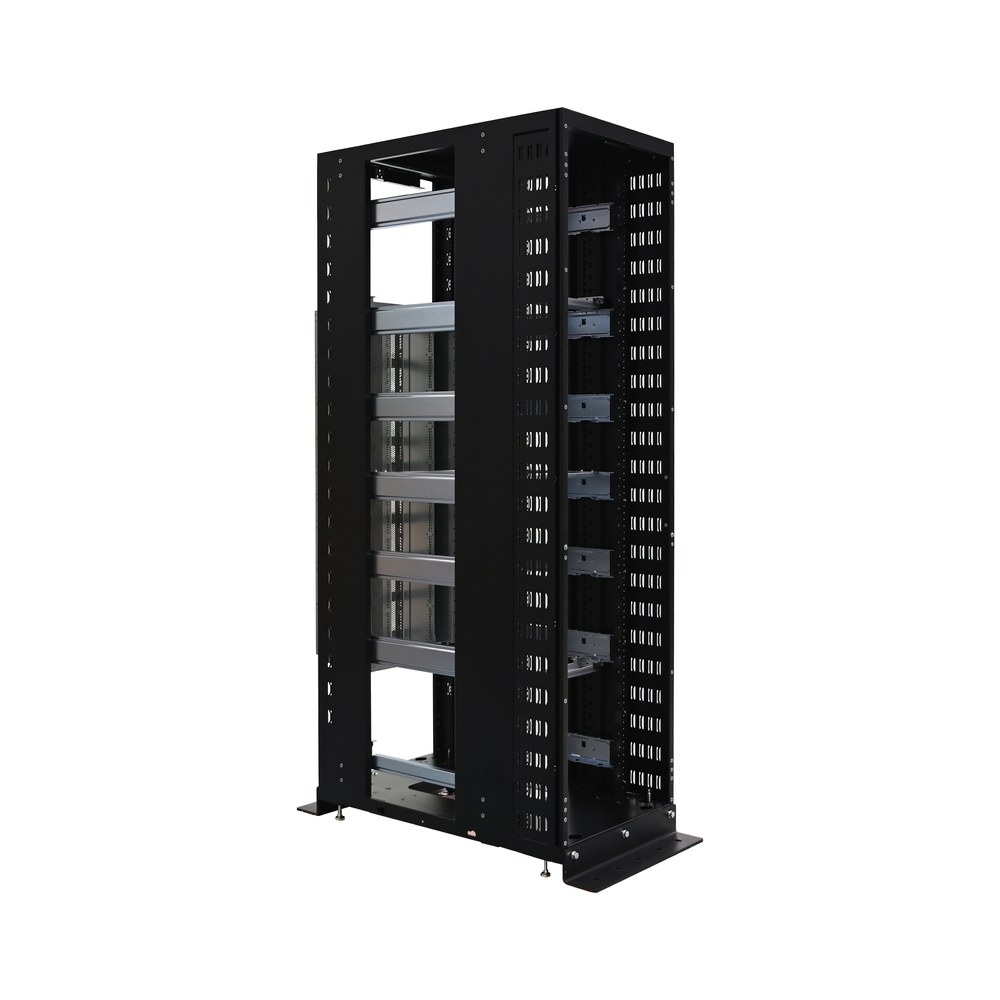
| Product model | DC-01 |
| Cabinet capacity | 48U |
| Dimensions (W×D×H) | 600 × 1200 × 2250 mm |
| Busbar power supply | 48 V DC |
| Total power | 36 kW / 72 kW |
| Manifold connectors | 20 × UQD04 male |
| Distribution manifolds | 2 pcs |
| Coolant flow rate (supply and return) | 12 m³/h |
| Filtration accuracy | 50–100 μm |
| Application | Supercomputing centres, AI training clusters, high-density GPU clusters, 5G BBU liquid cooling |
| Cooling configuration | Cold plate (about 80% of heat load) plus evaporative rear door (about 20%), or full immersion |
| PUE | 1.05–1.15 |
Datasheet, manual and drawings for this product (PDF).
Our engineers reply within 24 hours on business days.
Tel: +86-574-63783045
Email: ricky@idcpdu.com
Tell us your requirements — our sales team will get back to you with a quotation.
Liquid cooling outperforms air cooling in high-density environments running AI, machine learning and HPC workloads. PUE falls to 1.05–1.15, compute density per cabinet rises by about 50%, CPU and GPU temperatures stay stable, and the equipment failure rate drops by around 20%.
Integration follows a modular approach built on three components: a coolant distribution unit (CDU) that isolates the secondary clean-fluid loop from the primary facility water loop and regulates pressure and temperature; vertical supply and return manifolds inside the rack that distribute fluid to each server chassis; and leak-proof dry-break quick-disconnects that let individual servers be hot-swapped without shutting down the loop. Many facilities run hybrid layouts, using local CDUs for high-density compute clusters while existing air cooling serves standard networking and storage racks.
The cabinet suits high-density, high-performance GPU servers built for AI training, deep learning and HPC, including 8-GPU baseboard servers and current accelerator platforms from mainstream vendors. Final compatibility is confirmed against cabinet power (36 kW or 72 kW), manifold connector type and cold-plate interface.